Blog
17 Jun 2026
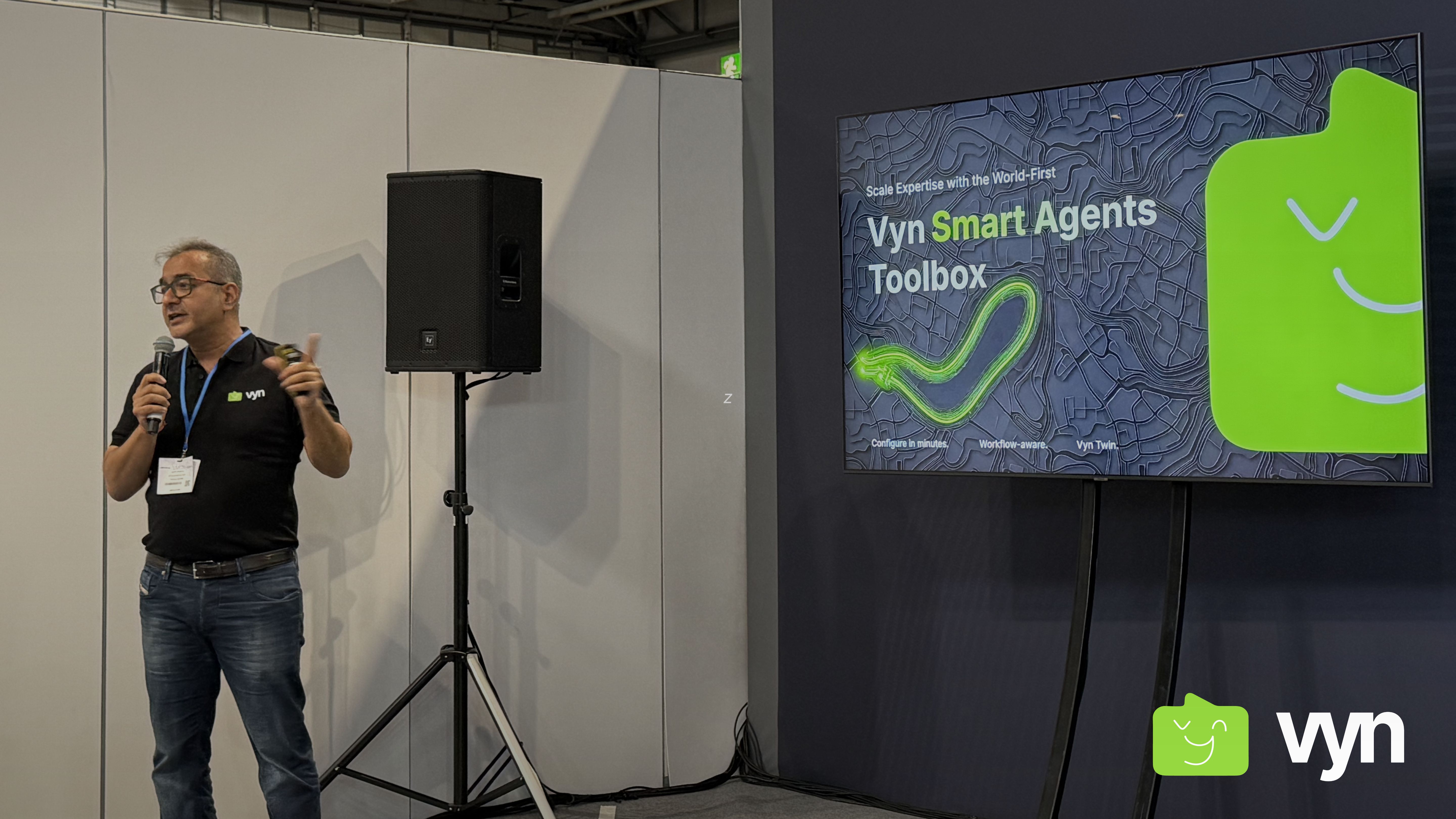
There's a conversation happening at every major UK utility right now. Boards are debating AI strategy. CIOs are building data platforms. Programme directors are evaluating tools that promise to accelerate capital delivery. And yet, across the industry, the results aren't arriving.
At Utility Week Live 2026, our Co-founder and CEO, Kapil Singhal revealed that the reason is hiding in plain sight, and that the fix has to start somewhere most utilities aren't looking: the field.
The workforce gap is real
UK utilities are entering the largest capital investment cycle in living memory. £100 billion in water. Over £200 billion in gas and electricity. And they're trying to deliver it with a workforce that is, by every measure, shrinking relative to the task.
For every five experienced field workers retiring, only two are entering the industry. Meanwhile, the volume of physical work is rising fivefold.
Subcontracting doesn't solve this. It just moves the problem further from view. The only viable answer is to make the workforce you have significantly more effective.
That's the problem AI actually needs to solve. Not a better dashboard. Not a smarter ERP. A tool that makes a junior person as capable as a senior one, in the field, on the day.
The tools were built for the office, not the field
Thirty years of enterprise software was designed for people at desks, and it shows. The platforms that run capital programmes were built around typed inputs, structured forms and screen-based workflows. Yet the people responsible for delivering the physical work operate in a completely different environment: outdoors, on the move, with their eyes and ears, not a keyboard.
When utilities try to bolt AI onto that picture, they're applying intelligence to data that was never properly captured in the first place. Field data routinely arrives in back-office systems months, sometimes years, after the work was done. By then, the context has gone, the conditions have changed, and the decision window has closed.
Capture, connect, close the loop
The answer Kapil put forward is straightforward: build for the way physical workers actually operate. Eyes and ears, not keyboards. The smartphone camera, already in every worker's pocket, is the right interface for the field.
From a single 60-second video, Vyntelligence extracts 375 structured data points across quality, safety, site intelligence and asset health. No hardware, no training, no prompting required. The data lands in real time, giving the back-office something it has rarely had: ground truth.
Three teams. Seventeen thousand sites.
Cornerstone manages 17,000 telecoms sites across the UK. All commissioning, acceptance and physical delivery is now handled by three people near Newbury. Deployments in Scotland that previously took 45 to 60 days now close in under 15.
At Enel Green Power, a renewables capital programme that had been scoped around 40 dedicated site inspectors was delivered instead by upskilled site admins, saving over $1.3 million and finishing three months ahead of an 18-month schedule.
At Northumbrian Water, a short field video captured during an O&M upgrade now feeds directly into the next AMP's asset planning, breaking a silo between operations and capital that has always meant redundant surveys and wasted capacity.
Across the wider customer base, the pattern holds: unplanned work down 50%, time to acceptance down 80%, rework down 60%, field visits down 50%.
The technology is the easy part
The most important thing Kapil shared is also the most uncomfortable: most AI tools fail in capital delivery not because the technology doesn't work, but because organisations deploy it onto unchanged processes and unchanged roles, and then wonder why nothing changes.
The customers seeing genuine results, three people running acceptance for 17,000 sites, site admins becoming inspectors, customers self-serving their own surveys, are the ones who let the tool reshape how work gets organised. A 1:100 supervisor-to-crew ratio isn't on anyone's roadmap. It's already live, at customers who committed to the redesign rather than just the deployment.
Intelligence belongs in the field
The CIO role, as Kapil framed it, needs to shift from managing information to democratising intelligence, putting it in the hands of the apprentice doing a survey, the contractor signing off a job, the customer scanning their own meter. Not as a future ambition, but as the operating model.
The Vyn Smart Agents Toolbox, launched at Utility Week Live, is built around exactly that. Operational teams configure their own agents, for site supervision, triage, surveying, without code, without prompting, without a data science team standing between them and the capability.
The question on the table
The £300 billion will be spent. The question is how much of it gets absorbed by a field-data gap that, as Kapil put it, is already solvable. The phone is in the worker's pocket. The tool exists. The only remaining question is whether organisations are willing to rethink how the work gets done, not just which software sits on top of it.
——————————————————————————
Interested in what a 60-second field video can do for your capital programme? Get in touch with us today.

