Events & Webinars
Blog
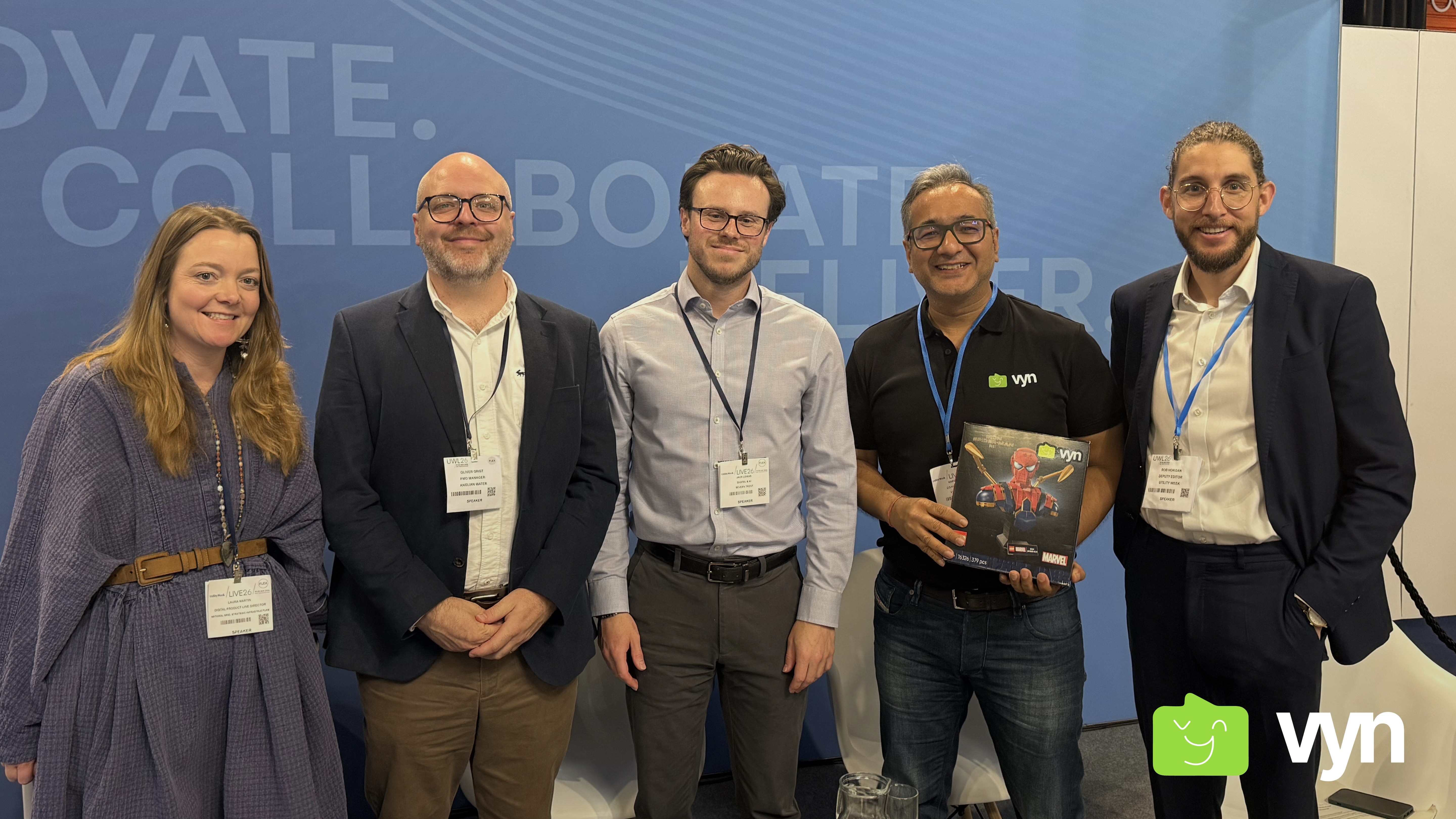
Capital delivery in water and energy is under enormous pressure: regulatory deadlines that can't move, steep fines if they are missed, and investment programmes that have ballooned in size without any matching increase in resources.
It was the perfect setup for a talk on high-tech solutions. Yet, when leaders from Anglian Water, National Grid, and Severn Trent took the stage at Utility Week Live 2026 to discuss AI in capital delivery, the conversation went in an unexpected direction.
Across three very different organisations, the exact same message surfaced again and again: technology is the easy part. The real work, and the real value, is in people and data.
That consensus is worth paying attention to. Here is what they shared from the front lines, and why we think they are exactly right.
Anglian Water: The crucial message is people
Most executives expect AI to shrink their workforce. Oliver Grist, Head of Capital PMO at Anglian Water, did the exact opposite:
"We've had to hire a lot, and we're going to hire some more."
Before touching AI, Anglian spent years fixing their data hygiene, dragging their project schedule pass rates from a dismal 10% up to 92%. Only then did they let an AI loose on their unstructured data.
It didn’t find abstract efficiencies. It exposed massive internal blind spots that were previously assumed to live in the supply chain:
The data surfaced 4,000 hours of delay over the last AMP tied to installing emergency showers and the water connections, that Anglian itself provides on its water recycling sites.
A suspected shortage of telemetry commissioning engineers turned out to be a purchasing issue. Compressed schedules had caused a staged delivery plan to collapse into trying to buy and commission 400 kiosks all at the exact same time.
Oliver’s takeaway was that you need a dedicated team, a flawless data foundation, and the humility to admit you haven't fully cracked the gold mine yet. It was a refreshingly honest note to end on.
National Grid: Foundations before everything
Laura Martin, Digital Product Line Director at National Grid, addressed a staggering logistical challenge: uniting seven different construction partners within the Great Grid Partnership to deliver £20 billion of critical infrastructure.
She shared how advanced tech is useless without a unified data foundation. To build it, National Grid avoided shiny new tools and focused on creating a shared digital ecosystem where internal teams and supply chain partners operate as one.
Rather than working in silos, partners now use a single system that weaves cost, schedule, risk, and design data into a single, continuous stream throughout the project lifecycle.
For National Grid, the ultimate goal is to keep data usable. While their roadmap includes heavy-hitting tech like 4D construction rehearsal and digital twins, Laura’s team is fiercely protective of the frontline worker.
As she put it,
"We are relentlessly focused on the end-user experience, keeping the tech as simple as possible, so that project teams can focus on doing their jobs well and not having to learn the technology."
True digital maturity isn't about utilising complex tools; it’s about making human collaboration feel seamless.
Severn Trent: Better skills, better tech, better data
Jack Lomas, Business Lead for Digital, Transformation and AI, framed Severn Trent’s challenge around scale: their capital programme nearly tripled from £2.4 billion to £6.5 billion, with absolutely zero increase in resource.
To meet a company mandate to deliver projects 50% faster and 30% cheaper, they had to change how they handle both people and software, focusing on three interconnected areas: upgrading their skills, streamlining their tech, and standardising their data.
The practical results of combining the three were straightforward:
Pipelines: Specialised software used their templates to cut a nine-month planning process down to a single week.
Waste treatment: Automated tools reduced the time from project promotion to a final design decision from a year to about 10 days.
Smarter investments: Rich catchment data helped them target greener solutions and secure major CapEx savings from the regulator.
Severn Trent’s ultimate goal is a one-click pipeline from project promotion to a final solution. But notice where Jack started. Not with the tools. With skills and data.
Three utilities, one conclusion
Three organisations with three very different starting points: a capital PMO, a transmission business, a design-led operation. And yet a single, shared conclusion:
Technology provides the platform, but the real value is unlocked by people and data.
Where we come in
At Vyntelligence, we bridge the gap between people and data.
The biggest blind spot in most utility AI strategies is that the data foundations stop at the office door. While the back offices have clean digital systems, the physical job sites are often stuck with clunky paperwork. If field data is messy or late, the entire system breaks down.
Vyn® reimagines this by bringing tech to the ground:
Vyn® powers people: Field workers don’t fill out complex forms. They just record a 60-second video of the site on their phone, explaining what they see in their own words.
Vyn® powers data: Our AI automatically converts that video and audio into high-quality, structured data and actionable insights.
By keeping transformation this simple, supervisors get instant, remote visibility into site safety and quality without having to drive from site to site. It ensures your frontline people are supported, and your back-office data is trusted.
Want to see it in action? Get in touch to see how a short video can secure the ground truth for your capital programmes.

