Blog
In a rapidly automating world, how do you keep the human element at the heart of your service strategy?
That was the central question as we sat down with Bob Feiner, Corporate Advisor, Feiner Management LLC and former SVP, Dell Technologies who spent 26 years navigating the shift from desktop PCs to the global cloud, and co-author of the book, with John Carroll, CEO of Service Council, Service is Humanity.
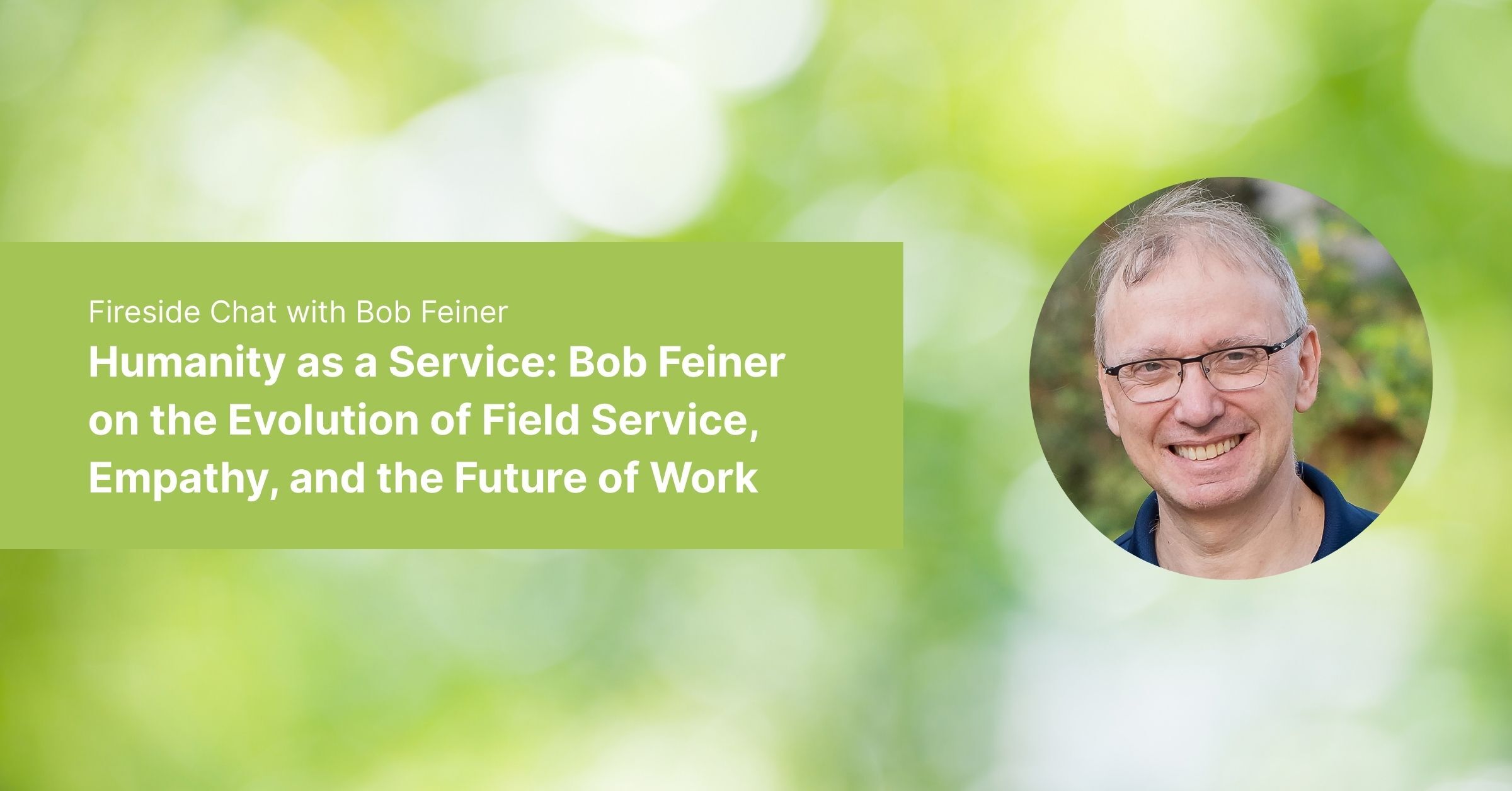
Our conversation kicked off with a core principle that resonates deeply with Vyn®’s people-first ethos. In an industry obsessed with automated efficiency and 'speed to close' metrics, how do you maintain the human dignity of the field technician?
You’ve seen the shift from desktop PCs to the global cloud. With the industry pushing so hard for automated efficiency, how do you keep the human dignity of a field technician front and center?
It’s a great question. For many customers, the field engineer is the only person they will ever physically see from your company. Whether they have a company badge or they’re a third party, they are the face of the brand. Any field service transaction means something failed. Something went wrong. The technician's experience is your company's chance to smooth that over as much as possible. For that, you have to give those folks everything they need at their fingertips to fix it right the first time, make the experience as easy as possible, but also build that relationship with the customer to remind them why they bought from you in the first place.
"The field engineer is the only person your customer might ever actually see. Are you treating that interaction as a transaction or a human moment?" — Bob Feiner, ex-Dell Technologies.
You’ve managed massive global teams. What’s an operational blind spot most executives miss when they think about scaling field productivity?
At my team's largest, we had 20,000 engineers. What I don’t think people realise is when you’ve got that many people, there’s a lot of touch points to make sure that something goes right. To get one job done, the dispatch has to reach the provider, the parts have to get to the provider/customer. You’re dependent upon the logistics company and you’re dependent upon the parts carrier. Even if every single touchpoint operates at 99% efficiency, the total process success rate is significantly lower. The blind spot isn't just a lack of automation, but a failure to fully grasp and measure the cumulative risk across the entire chain. The key is to drive automation to limit those touches and reduce the points of failure. In the end, it’s about giving the customer an exceptional experience.
When you have a team of thousands, how do you maintain visibility into job completion, payments, and, most importantly, the quality of service?
It is important to have a robust Business Management System (BMS) to measure every piece of the transaction. But what I found most valuable in the survey process was the comments, then you really get a kind of context of how a customer is feeling about the service. Beyond customer feedback, my approach involved annual surveys and councils for field engineers, seeking robust feedback directly from the frontline. Every year, we’d do an employee survey. I’d get 10,000 to 15,000 comments. I read every single one. It took me a month. People asked me, "Why don’t you just use AI to summarise them?" My answer was that genuine connection and insight often lies in the anecdotes, not the aggregate data. If someone took the time to provide feedback—even if it was negative about me—I had to respect that and take the time to read it. You have to talk to your frontline people constantly. Don’t just leave it to the managers.
Industry data shows a shrinking supply of field talent just as service complexity is skyrocketing. This creates a dangerous knowledge debt. At what point do you think the industry started relying too much on hope as a strategy for knowledge transfer?
We’re in the middle of a Silver Tsunami. You don’t see many kids coming out of school saying their dream is to be a field service engineer. It puts massive pressure on how you recruit and what technologies you enable. Younger folks are enticed by robust tech—video tools, augmented reality, things they can learn and adapt to quickly. But as the supply of veteran knowledge leaves, the cost of labor goes up, and the pressure on margins increases. Technology has to be used to bridge that gap, not just for efficiency but for enablement.
After 26 years at the forefront of tech, you’ve released Service is Humanity. It feels like a manifesto for a more grounded approach to leadership. What is your advice for new service leaders trying to navigate this space race of AI and digital disruption?
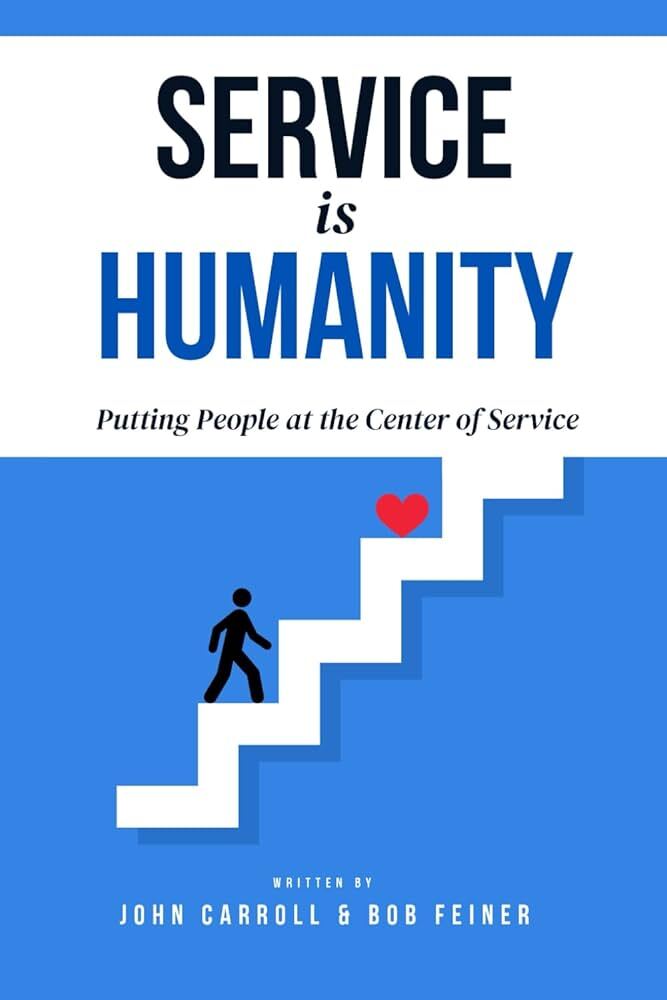
You need to make sure that your people truly have a service mindset. Service interaction is a human-to-human transaction. The moment a person is involved, empathy is non-negotiable. It is important to build humanity even into your tech implementations.
To wrap up, what’s the most underrated trait in a leader?
Their humanity and the ability to connect with people. Early in my career, I tried to separate the personal from the professional. I learned over time that people need to know you’re a real person. You have wins, defeats, health issues, and personal lives. Sharing that makes you relatable. People follow a leader, a person—they don’t follow a title. They need to know you’ve got their back, and you shouldn’t have to say it; they should be able to feel it. At the end of the day, service is personal, and a great customer experience always starts with a great human experience.
Technology does the work, but humans solve the problems. Let’s have a real conversation about your field operations. Click to connect with us.

